
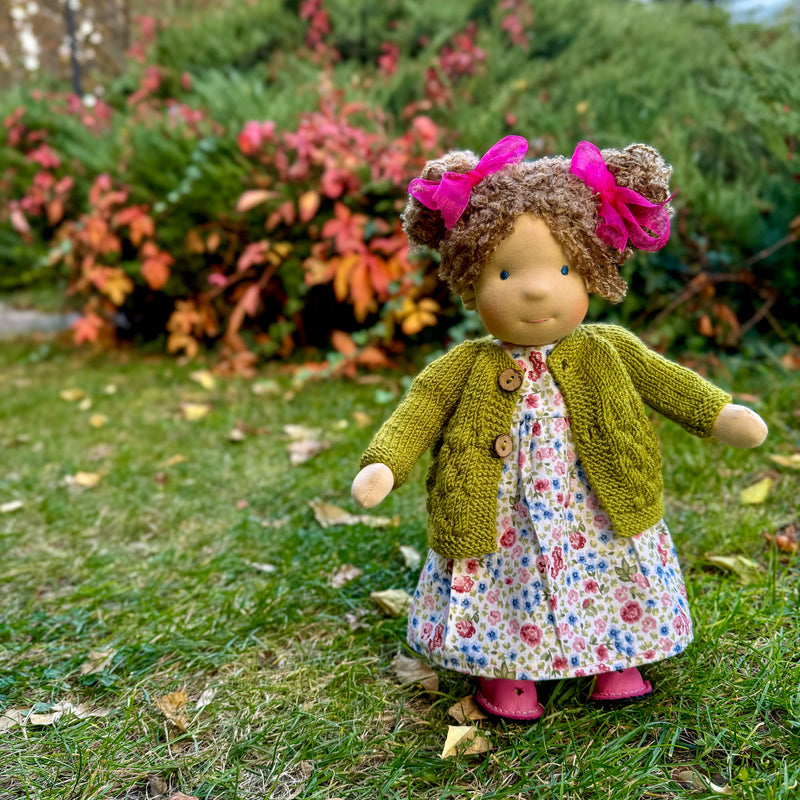
Every parent knows the moment: the toddler who won't sleep without a specific blanket, the 4 year old who reaches for their doll before anything else when they're upset, the child who needs to know exactly where their stuffed rabbit is before they can feel calm. Comfort objects are one of the most universal aspects of early childhood — and one of the most misunderstood.
Are they healthy? Should you encourage them? What happens if it gets lost? And what makes something become a comfort object in the first place? Here's what the research says.
What Is a Comfort Object?
A comfort object is any object — most commonly a soft toy, doll, or blanket — that a child becomes emotionally attached to for security and comfort. The technical term is transitional object, coined by British paediatrician and psychoanalyst Donald Winnicott in 1951. Winnicott described it as an object that helps a child transition from the total dependence of infancy toward greater independence — a psychological bridge between the security of the parent's presence and the ability to manage without it.
The comfort object carries the associations of safety, warmth, and home. When a child is in an unfamiliar situation — at nursery, in hospital, visiting relatives — the comfort object brings a portable piece of their safe world with them.
"A comfort object isn't a replacement for the parent. It's a bridge — helping the child carry the feeling of security into situations where the parent can't always be."
How Common Are Comfort Objects?
Very common. Research suggests that between 50% and 70% of children in Western cultures develop an attachment to a comfort object at some point in early childhood. The attachment typically begins between 6 months and 3 years, often peaking around 18 months to 2 years, and usually reduces naturally as the child develops stronger social relationships and coping skills.
Not all children develop comfort object attachments — and this too is entirely normal. The absence of a comfort object doesn't indicate anything negative about a child's emotional development.
Why Do Children Form Comfort Object Attachments?
Several factors contribute:
- Sensory familiarity — comfort objects are typically soft, warm, and pleasant to touch. The specific sensory qualities of the object — its texture, smell, weight — become deeply associated with safety and calm.
- Predictability — unlike people, a comfort object is always available and always the same. For a young child whose world is frequently unpredictable, this constancy has real value.
- Association with calm — comfort objects are typically introduced during soothing moments (bedtime, feeding, settling). The object becomes neurologically associated with the physical calm of those moments.
- The child's imagination — children often imbue comfort objects with personality, agency, and relationship. The doll isn't just a toy — it's a companion with a history and a presence that the child genuinely experiences as real.
Is a Comfort Object Healthy?
Yes — consistently, across decades of developmental research. Children who have comfort objects are not more dependent or insecure than those who don't; if anything, the research suggests the opposite. A comfort object is a healthy coping mechanism that helps children manage the emotional demands of early childhood — separation, transitions, new situations, illness, fear.
The concern some parents have — that a comfort object is a sign of insecurity or emotional dependence — is not supported by the evidence. A child who uses a comfort object to self-regulate is demonstrating exactly the kind of self-soothing capacity that good emotional development produces.
What Makes a Good Comfort Object?
Comfort objects can't be engineered — a child chooses what becomes one, and their choice is rarely predictable. But the qualities that make an object likely to become a comfort object include:
- Softness — comfort objects are almost always soft; the tactile sensation is central to the comfort they provide
- Appropriate size — small enough to carry everywhere and sleep with; large enough to hold and hug
- Durability — a comfort object that falls apart is a genuine problem; natural materials that age gracefully are preferable
- Consistent presence — objects that are always available, always accessible, and always the same are more likely to become comfort objects
- Personality — objects the child can project onto — a doll with an open, minimal expression — have more comfort object potential than objects with fixed, detailed expressions
Why Waldorf Dolls Make Particularly Good Comfort Objects
A Waldorf doll has most of the qualities that make a good comfort object. It's soft — organic cotton and natural wool are genuinely pleasant against a child's skin in a way that synthetic materials aren't. It's a good size — the 38cm form factor is comfortable to carry and sleep with. It's durable — natural materials that soften with handling rather than breaking down. And its minimal, open expression allows the child to project whatever emotional state they need onto the doll — happy or sad, tired or excited, scared or brave.
Many parents report that their child's Heartmade Doll becomes their primary comfort object — the one they ask for at night, during illness, or when something has frightened them. This isn't coincidence; it's a consequence of the design.

A Waldorf doll's soft natural materials, open expression, and durable construction make it one of the most natural comfort objects a child can have.
What If the Comfort Object Gets Lost?
One of the most stressful experiences of early parenting is the lost comfort object. A few practical thoughts:
- Have a backup if possible — for comfort objects introduced early, consider having two identical versions rotating in use so both acquire the same smell and feel
- Don't panic — children often manage better than parents expect; the parent's distress can amplify the child's
- Search systematically — comfort objects are usually lost in predictable places; retrace the day before expanding the search
- For a Waldorf doll — contact the maker; a skilled maker may be able to create a close replacement, though the "smell" of a beloved doll takes time to replicate
When Should a Child Give Up Their Comfort Object?
There is no fixed age at which a child should give up their comfort object. Most children naturally reduce their dependence as they develop stronger coping skills, more robust friendships, and greater confidence in managing without external support. This typically happens between ages 4 and 7, but later is also entirely normal.
Forcing a child to give up a comfort object before they're ready is generally counterproductive — it removes a coping resource without replacing it with anything, and can create anxiety rather than reducing it. The transition away from a comfort object goes smoothest when it's child-led.
- 50–70% of children in Western cultures develop a comfort object attachment
- Typically begins between 6 months and 3 years
- Comfort objects are associated with healthy emotional development
- Children choose their own comfort objects — they can't be prescribed
- Natural reduction in use typically happens between ages 4 and 7
- Forcing early removal is generally counterproductive
Handmade Waldorf dolls by Heartmade Doll
Soft organic cotton, natural wool, open expression. The natural qualities that make a Waldorf doll a beloved comfort object — and a lasting play companion. Ships worldwide in 3–5 days.
Shop Handmade Dolls →Frequently Asked Questions
What is a comfort object?
A soft toy, doll, or blanket a child becomes emotionally attached to for security. Also called a transitional object, it carries the associations of safety and home — providing portable comfort in unfamiliar situations. The term was coined by Donald Winnicott in 1951.
Is it normal for a child to have a comfort object?
Yes — 50–70% of children in Western cultures develop one. Having a comfort object is associated with healthy emotional development, not dependency or insecurity.
When should a child give up their comfort object?
There's no fixed age. Most children naturally reduce dependence between ages 4 and 7. Forcing early removal is generally counterproductive — the transition goes smoothest when child-led.
Can a Waldorf doll become a comfort object?
Yes — many children form deep comfort attachments to their Waldorf dolls. The soft natural materials, appropriate size, durable construction, and open expression make it well-suited to become a primary comfort object.