
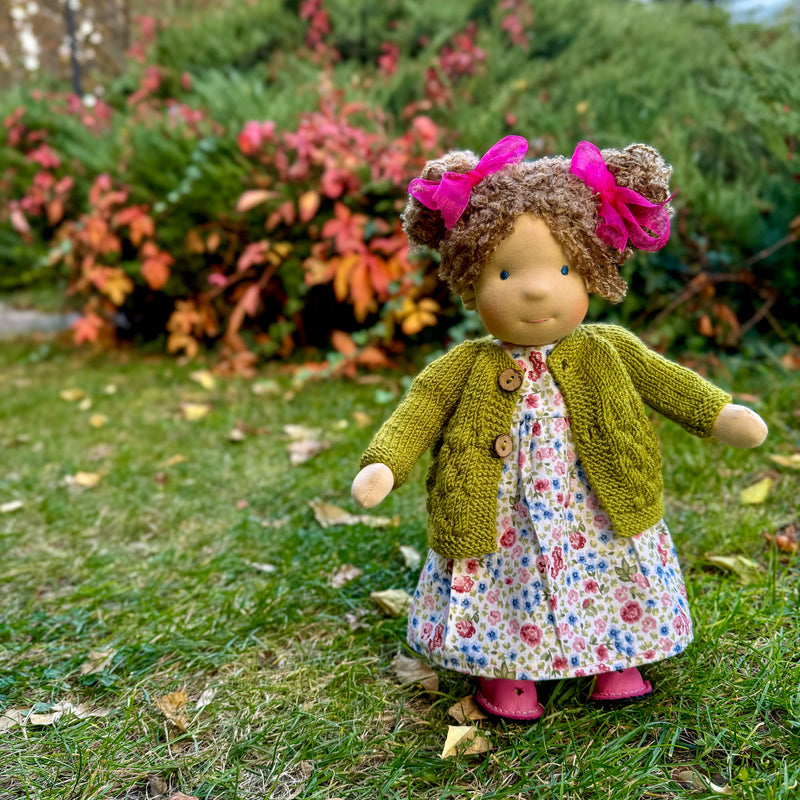
When a child picks up a doll, gives it a name, wraps it in a blanket, and tells it a story — something important is happening. It might look like simple play. It's not. It's some of the most cognitively and emotionally demanding work a young child does.
Imaginative play — also called pretend play, symbolic play, or fantasy play — is one of the most researched areas in child development. The evidence for its benefits is consistent and substantial. Here's what we know.
What Is Imaginative Play?
Imaginative play is any play in which a child creates their own scenarios, characters, and rules rather than following a fixed script. It includes pretending a block is a car, giving a doll a personality and a story, building an imaginary world with friends, and acting out real-life scenarios like cooking, going to the doctor, or putting a baby to sleep.
The defining characteristic is that the child is the author. The play goes where the child decides — not where a toy's programming or a game's rules dictate.
"Play is the work of childhood. And imaginative play is where the most important work happens."
The Core Benefits of Imaginative Play
What Happens When Imaginative Play Is Replaced
There is growing concern among child development researchers about the decline of free, imaginative play in childhood — replaced by structured activities, educational programmes, and screen time. The research on this is sobering.
Studies have found that children today spend significantly less time in unstructured, child-led play than children did two or three generations ago. Alongside this decline, researchers have noted increases in anxiety, depression, and difficulties with self-regulation among children and adolescents. The relationship is correlational, not definitively causal — but the pattern is consistent enough to take seriously.
- Self-directed creativity — the child generates the content, not a device
- Sustained attention — imaginative play can last hours; screen content changes every few seconds
- Delayed gratification — play doesn't give instant rewards; the child must create their own satisfaction
- Physical engagement — whole-body play supports motor development that screen use cannot
- Social negotiation — play with others requires real-time human interaction and compromise
- Emotional processing — children use play to work through feelings and experiences
How a Waldorf Doll Supports Imaginative Play
A Waldorf doll is specifically designed to support imaginative play rather than direct it. The minimal facial features — soft embroidered eyes and a gentle expression — leave the doll's emotional state open for the child to decide. The simple, natural materials engage the senses without overstimulating. The removable clothing creates practical play opportunities. The absence of batteries, sounds, and programmed responses means the play goes wherever the child takes it.
In Waldorf education, the doll is considered one of the most important toys of early childhood precisely because of how completely it serves imaginative play. A child who plays deeply with a simple doll is exercising every capacity that the research identifies as central to healthy development.

A Waldorf doll does nothing on its own. That's the point — everything it does, it does because the child decides.
How to Support Imaginative Play at Home
- Provide open-ended toys — toys that don't have a fixed play script leave room for imagination. Simple dolls, wooden blocks, play silks, and art materials are the classics for good reason.
- Protect unstructured time — children need time that isn't scheduled, directed, or optimised. Boredom is often the precursor to imaginative play.
- Reduce screen time — screens provide content; imaginative play requires the child to generate it. The more screen time, the less practice at generating.
- Don't direct the play — when adults join a child's imaginative play, the most valuable role is follower, not leader. Ask what the child needs you to be; don't impose a storyline.
- Let the mess happen — imaginative play often involves spreading things out, building elaborate setups, and leaving evidence of the story. The mess is the play.
Handmade Waldorf dolls by Heartmade Doll
Organic cotton, natural wool, minimal features, no batteries. Designed to leave everything to the child's imagination. SGS certified safe. Ships worldwide.
Shop Handmade Dolls →Frequently Asked Questions
What are the benefits of imaginative play for children?
Imaginative play supports creativity, emotional intelligence, language development, executive function, social skills, and fine motor development. Research consistently shows children who engage in rich imaginative play develop stronger cognitive and social-emotional capacities.
What is the difference between imaginative play and pretend play?
The terms are often used interchangeably. Pretend play refers specifically to acting out scenarios and roles. Imaginative play is broader — it includes pretend play but also creative building and storytelling where the child creates their own scenarios rather than following a fixed script.
At what age do children start imaginative play?
Simple pretend play begins around 18 months to 2 years. Between ages 3 and 5, it becomes richer and more elaborate. Ages 3 to 7 are widely considered the peak years for imaginative play.
How do you encourage imaginative play in young children?
Provide open-ended toys, protect unstructured time, reduce screen time, and resist directing the play. Toys that don't dictate how to play — simple dolls, wooden blocks, play silks — leave the most room for imagination to develop.