
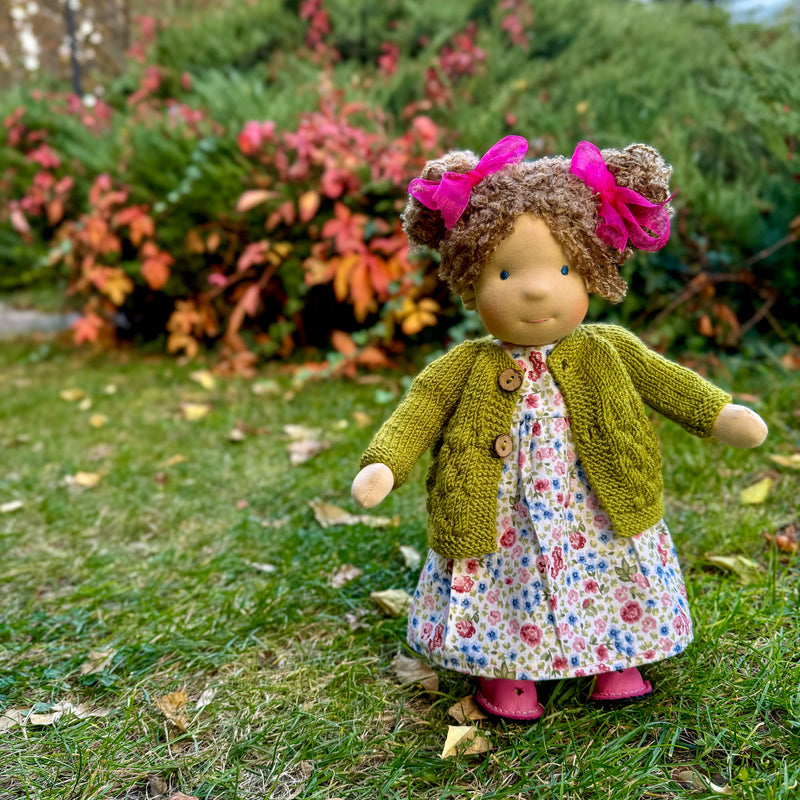
If you've been looking at Waldorf dolls for the first time, you've probably noticed two things: they look very different from the dolls most of us grew up with, and they cost considerably more. That raises an obvious question — what exactly is the difference, and is it worth it?
We make handmade Waldorf dolls in Ankara, Turkey. We're obviously not neutral. But we can give you an honest, detailed comparison — because we think parents deserve to make informed decisions rather than just taking a brand's word for it.
The Short Answer
A Waldorf doll is a handmade toy crafted from natural materials — organic cotton, natural wool, leather — with minimal facial features designed to encourage imaginative play. A regular doll is typically mass-produced from plastic or synthetic materials, with detailed realistic features and often electronic or interactive components.
The differences go deeper than materials. They reflect fundamentally different ideas about what a toy is for.
Side-by-Side Comparison
| Category | Waldorf Doll | Regular Doll |
|---|---|---|
| Materials | Organic cotton, natural wool | Plastic, synthetic fabric |
| Filling | Natural wool | Polyester stuffing |
| Facial features | Minimal, soft embroidery | Detailed, fixed expression |
| Safety certified | ✓ SGS / ASTM | Varies by brand |
| No phthalates | ✓ | Not guaranteed |
| No plastic parts | ✓ | ✗ |
| Handmade | ✓ | ✗ |
| Open-ended play | ✓ | Limited |
| Durability | Years of play | Varies widely |
| Price range | $80–$200 | $10–$80 |
Materials: Natural vs Synthetic
This is the most significant difference for most parents concerned about safety.
A Waldorf doll is made from organic cotton and natural wool — materials that have been used to make children's toys for centuries. Neither contains phthalates, lead, or synthetic chemical treatments. There are no plastic parts that could break off, no hard edges, and no synthetic filling that could off-gas chemicals over time.
A regular plastic doll is a different matter. Most plastic toys are made from PVC or ABS plastic, which can contain phthalates (used to make plastic flexible) and other additives. Some cheap dolls sourced from unregulated manufacturers have tested positive for lead and cadmium in paint and pigments. Polyester filling — standard in most stuffed toys — is a petroleum-derived synthetic material.
"A child who sleeps with a toy every night deserves to know what that toy is made of."
This doesn't mean all regular dolls are unsafe — many reputable brands do test their products and meet safety standards. But with a Waldorf doll from a certified maker, you have independent verification that the materials have been tested and cleared.
Facial Features: Why Waldorf Dolls Look Different
If you've seen a Waldorf doll for the first time, the minimal face is often the first thing people notice — and sometimes the first thing that gives people pause. Why would a doll have almost no face?
The answer is rooted in child development theory. Rudolf Steiner, the founder of Waldorf education, believed that a doll with a fully detailed, fixed expression limits a child's imaginative engagement. If the doll always smiles, it can only ever be happy. If the doll always looks surprised, the child must build their story around that surprise.
A doll with minimal features — soft, gentle eyes and a barely-there expression — can be whoever the child needs it to be. Happy, sad, curious, brave. The child fills in the emotional landscape, which builds empathy, emotional intelligence, and creative thinking.


Waldorf dolls have minimal facial features — not because they lack detail, but because that space is left for the child's imagination.
Play Value: Open-Ended vs Feature-Rich
Regular dolls — particularly modern ones — are often highly feature-rich. They talk, cry, eat, walk, change colour, respond to touch. These features can be engaging, but they also define and limit how the toy is played with. The toy does the playing; the child watches and responds.
A Waldorf doll does nothing on its own. It has no batteries, no sounds, no programmed responses. Everything it does, it does because the child decides. This is what Waldorf educators call "open-ended play" — play without a predetermined outcome, where the child is the author of the story.
Research in child development consistently suggests that open-ended play supports language development, problem-solving, emotional regulation, and creativity more effectively than feature-rich electronic toys. The less the toy does, the more the child has to do — and that's where development happens.
- Imaginative and creative thinking
- Language and storytelling skills
- Emotional intelligence and empathy
- Problem-solving and decision-making
- Fine motor skills — dressing, undressing, caring for the doll
- Social skills — role play, cooperative play with other children
Durability: Which Lasts Longer?
Plastic dolls can break — limbs snap, paint chips, electronic components fail. A well-made Waldorf doll, by contrast, is remarkably durable. Organic cotton and natural wool are tough materials that soften with use rather than breaking down. There are no fragile parts to snap off.
We regularly hear from parents whose children are still playing with their Heartmade Doll years after they received it — and from parents who have passed dolls between siblings. A Waldorf doll that's well cared for can genuinely last a decade or more.
When you factor in the longevity, the cost-per-year of a good Waldorf doll often ends up lower than replacing a cheaper plastic doll every year or two.
Price: Why Waldorf Dolls Cost More
A Waldorf doll costs more than a mass-produced plastic doll — and that's worth being honest about. A Heartmade Doll starts at $114. A regular doll of comparable size might cost $15–$40.
The price difference reflects real differences in how the dolls are made:
- Organic cotton costs more than synthetic fabric
- Natural wool filling costs more than polyester stuffing
- Hand-stitching by skilled makers costs more than machine production
- Independent safety testing (SGS, ASTM) costs money and time
- Genuine leather shoes cost more than plastic or faux leather
Whether that price difference is worth it depends on what you're prioritising. For parents who want natural materials, independent safety certification, and a toy built to last — a Waldorf doll is worth the investment. For parents who need an inexpensive gift and aren't concerned about materials, a regular doll will do the job.
Handmade Waldorf dolls from Heartmade Doll
Organic cotton, natural wool, SGS certified safe. Hand-knitted cardigan, leather shoes, and a teddy bear — all included. Ships worldwide in 3–5 days.
Shop Handmade Dolls →Which Should You Choose?
Choose a Waldorf doll if:
- You want natural, organic materials with independent safety certification
- You value open-ended, imaginative play over feature-rich interaction
- You're looking for a gift that will last for years
- You want something handmade and unique rather than mass-produced
- You're buying for a child between ages 3 and 8
Choose a regular doll if:
- Budget is the primary concern
- The child specifically wants a feature-rich or licensed character doll
- You're buying for an older child who wants interactive play features
Frequently Asked Questions
What is the difference between a Waldorf doll and a regular doll?
A Waldorf doll is handmade from natural materials like organic cotton and wool, with minimal facial features to encourage imaginative play. A regular doll is typically mass-produced from plastic or synthetic materials with detailed features and often electronic components.
Are Waldorf dolls better than regular dolls?
For parents concerned about materials and safety, Waldorf dolls are generally considered superior — no plastic, no phthalates, no synthetic fillings. For open-ended imaginative play, Waldorf dolls have clear advantages. However, regular dolls may suit older children who want feature-rich or character-specific play.
Why do Waldorf dolls have no face?
Waldorf dolls don't have no face — they have minimal facial features, typically soft embroidered eyes and a gentle expression. This is intentional: minimal features allow children to project their own emotions onto the doll, supporting imaginative play and emotional development.
Are Waldorf dolls worth the price?
Waldorf dolls cost more because they are handmade from natural materials and independently safety tested. For parents prioritising safety, durability, and play value, they are widely considered worth the investment — a well-made Waldorf doll can last many years and be passed between children.
What age are Waldorf dolls suitable for?
Waldorf dolls are generally recommended for children ages 3 and above. Below age 3, small details like yarn hair and hand-knitted clothing can pose safety concerns. Many parents purchase them as gifts for younger children, storing them until the child is old enough to play safely.