
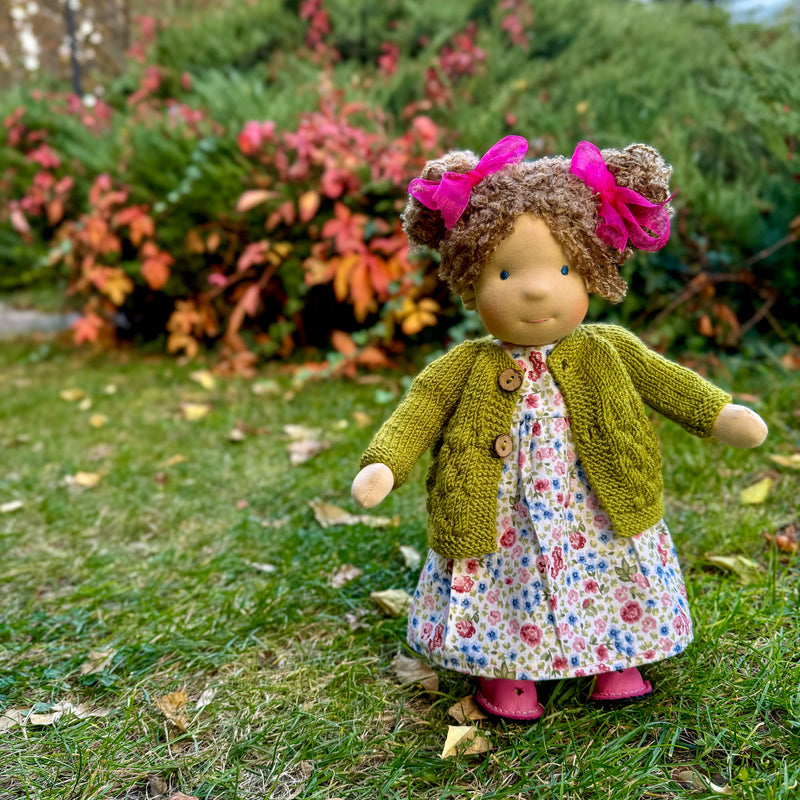
Both Waldorf dolls and ragdolls are soft, cloth dolls — and at first glance, the difference might not be obvious. Both have fabric bodies, both are hand-sewn, and both have been given to children for generations. But the similarities are largely surface-level. Underneath them are significant differences in design philosophy, construction quality, and materials that matter considerably for parents who think carefully about what they put in a child's hands.
What Is a Ragdoll?
The ragdoll is one of the oldest toy forms — a simple cloth doll made from scraps of fabric, stuffed with whatever was available. The name itself tells the story: rag, as in leftover material; doll, as in human figure. Historically, ragdolls were made by mothers and grandmothers from whatever was to hand — not from a design philosophy, but from necessity and love.
Today, "ragdoll" covers a wide range — from simple handmade cloth dolls to mass-produced fabric dolls sold in toy shops. The term is loose and doesn't specify materials, construction standards, or developmental intent. A ragdoll can be excellent or mediocre; the word itself tells you very little.
What Is a Waldorf Doll?
A Waldorf doll is a specific type of soft cloth doll designed according to the educational philosophy of Rudolf Steiner. It's not just a cloth doll that happens to be handmade — it's a design tradition with specific intentions: natural materials, a sculpted head, minimal facial features, and child-like proportions. Every design decision is made in service of open-ended, child-led play.
"A ragdoll is a cloth doll. A Waldorf doll is a cloth doll with a philosophy — and the philosophy shapes every design decision."
Side-by-Side Comparison
| Category | Waldorf Doll | Typical Ragdoll |
|---|---|---|
| Design intent | Educational philosophy — open-ended play | Traditional toy form — no specific philosophy |
| Head construction | Sculpted and shaped with wool filling | Usually flat or simply stuffed |
| Facial features | Minimal — embroidered, open expression | Varies — embroidered or printed, often more detailed |
| Outer fabric | Organic cotton | Varies — cotton, polyester, or blend |
| Filling | Natural wool | Varies — wool, cotton, or polyester |
| Clothing | Removable — designed for dressing play | Often sewn on or minimal |
| Safety certification | SGS / ASTM F963-23 (if reputable) | Varies widely |
| Price range | $80–$200 | $15–$80 |
The Key Differences That Matter
The head
The most significant structural difference between a Waldorf doll and a typical ragdoll is the head. A Waldorf doll's head is sculpted — the natural wool filling is packed, shaped, and tied to create a three-dimensional, rounded form that holds its shape through years of use. A typical ragdoll head is usually flat or simply stuffed, without the sculpting that gives a Waldorf doll its distinctive, lifelike quality.
This matters more than it might seem. A well-sculpted head gives the doll presence — it looks and feels like a figure worth caring for, which is the foundation of the nurturing play a Waldorf doll is designed to support.
The face
A Waldorf doll's facial features are deliberately minimal — soft embroidered eyes, a gentle suggestion of a mouth. The expression is intentionally open. A ragdoll's face is often more detailed and more fixed — a printed smile, defined features, a specific emotional expression.
The Waldorf approach is philosophical: a doll that always smiles can only ever be happy. A doll with a soft, open expression can reflect whatever the child brings to it — sadness, joy, curiosity, fear. This openness is what makes the play richer.
Materials
A well-made Waldorf doll specifies organic cotton and natural wool by design — these aren't accidental material choices, they're part of the philosophy. A ragdoll might be made from the same materials, or from polyester and synthetic fabric. The word "ragdoll" tells you nothing about what's inside it.
Clothing
Waldorf dolls have removable clothing — dress, cardigan, shoes — designed to be put on and taken off as part of play. Many ragdolls have clothing that's sewn on or not designed for dressing play. The removable clothing on a Waldorf doll is a fine motor skill opportunity and a significant part of what makes the doll valuable developmentally.

The sculpted head, open expression, and removable clothing are what separate a Waldorf doll from a typical ragdoll — each detail is a design decision, not an accident.
When a Ragdoll Is Perfectly Fine
Not every cloth doll needs to be a Waldorf doll. A simple, well-made ragdoll from natural materials — cotton fabric, natural filling, embroidered features — can be a wonderful toy for a young child. The Waldorf philosophy offers a useful framework for evaluating any cloth doll; a ragdoll that meets those standards is, in effect, a Waldorf doll in everything but name.
The concern is with ragdolls made from synthetic materials, with polyester filling and printed plastic-feeling faces — mass-produced versions that use the soft-cloth-doll format without the material quality or developmental intention that makes a cloth doll genuinely valuable.
- Sculpted three-dimensional head — holds shape through years of play
- Minimal embroidered features — open expression the child fills in
- Organic cotton and natural wool — specified by the design tradition
- Removable clothing — dressing play built into the design
- Child-like proportions — nurturing play, not aspiration
- Independent safety certification — verifiable, not just claimed
Handmade Waldorf dolls by Heartmade Doll
Organic cotton, natural wool, sculpted head, open expression. SGS certified to ASTM F963-23. Ships worldwide in 3–5 days.
Shop Handmade Dolls →Frequently Asked Questions
What is the difference between a Waldorf doll and a ragdoll?
Both are soft cloth dolls, but Waldorf dolls are made from natural materials with sculpted heads, minimal embroidered features, and removable clothing — designed to a specific educational philosophy. Most ragdolls are simpler constructions with less attention to developmental intent or material quality.
Is a Waldorf doll better than a ragdoll?
For parents who prioritise natural materials, developmental play value, and independent safety certification, yes. A simple well-made ragdoll from natural materials can also be lovely — the key difference is the level of design intention and material quality.
Are ragdolls safe for children?
Depends on the materials and construction. A ragdoll from organic cotton with natural filling and embroidered features can be very safe. One from synthetic fabric with plastic eyes is a different matter. Always check for independent safety certification.
What makes a Waldorf doll different from other cloth dolls?
The sculpted three-dimensional head, minimal open-expression face, natural materials throughout, child-like proportions, and removable clothing. These aren't aesthetic choices — they're design decisions rooted in a specific philosophy of early childhood play.