
Toddlers — children between roughly 1 and 3 years old — are in a specific safety category when it comes to toys. They're more capable than babies: stronger, faster, and able to manipulate objects with increasing skill. But they still mouth toys regularly, still pull at everything, and are still too young to understand safety in any meaningful way. The responsibility for what they're in contact with lies entirely with the adults around them.
For this age group, the question of non-toxic toys is particularly important — and, as with baby toys, the term "non-toxic" itself needs some scrutiny before it can be trusted.
Toddlers vs Babies: What's Different About Toy Safety?
The safety principles for toddler toys are similar to those for baby toys — but with some important differences:
- Toddlers mouth toys less frequently than babies, but still do — particularly at 12 to 18 months. By 3, most children have reduced mouthing significantly, but it's not gone.
- Toddlers are physically stronger — they can pull parts off toys, bend flexible materials, and apply force that a baby cannot. Parts that are secure for a baby may not be secure for a determined toddler.
- Toddlers have more complex play — they interact with toys in more varied ways, which means more contact points and more ways to be exposed to materials.
- Toddlers can reach more things — a toy that was safely out of a baby's reach may not be out of a toddler's.
"A toddler is stronger, faster, and more determined than a baby. The safety bar for their toys needs to account for that."
What "Non-Toxic" Means — and Doesn't Mean
"Non-toxic" is an unregulated marketing term. Any seller can use it without testing or verification. The only meaningful safety evidence for a toy is independent third-party certification — a named testing organisation, a specific safety standard, and a verifiable report number.
For the US market, this means ASTM F963-23 tested by SGS, Intertek, Bureau Veritas, or a similar accredited body. For the European market, EN71. These standards test the finished toy for phthalates, lead, cadmium, and other harmful substances — not just the materials in isolation, but the assembled product a toddler will actually interact with.
The Best Non-Toxic Toy Materials for Toddlers
Our Top Non-Toxic Toy Picks for Toddlers
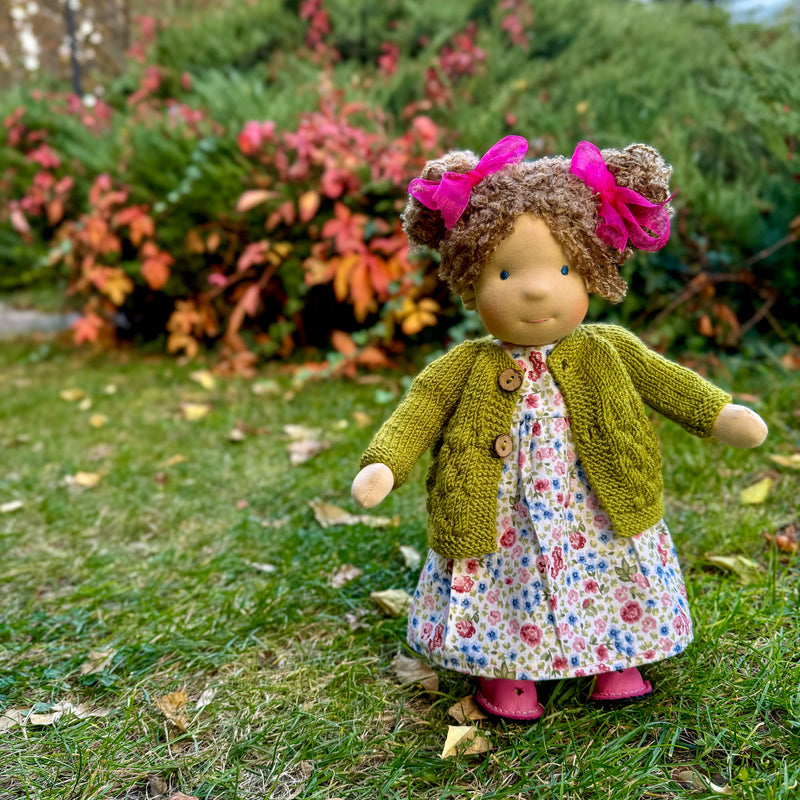
Handmade Waldorf dolls — from age 3
A handmade Waldorf doll from a certified maker is one of the most thoroughly non-toxic soft toys available — organic cotton body, natural wool filling, embroidered features with no plastic parts, and independently tested to ASTM F963-23. Recommended for ages 3 and above due to small accessories; can be given as a gift earlier and introduced at 3.
Natural wooden stacking and sorting toys — from age 12 months
Simple wooden stacking rings, nesting cups, and sorting boxes made from solid wood with natural finishes are ideal for 12 to 36 month olds. They support fine motor development with no toxic materials — no plastic, no synthetic paint, no electronic components.
Organic cotton soft toys — from birth
Simple soft toys made from organic cotton with embroidered features and natural filling are safe from birth through toddlerhood. Key requirements: no plastic eyes or buttons (embroidered only), organic cotton fabric, natural cotton or wool filling.
Natural rubber push toys — from 12 months
Simple push-and-pull toys made from natural rubber or solid wood are appropriate from around 12 months, when toddlers are beginning to walk and love pushing things. Natural rubber is particularly good — flexible, safe if mouthed, and free from PVC phthalates.

Every Heartmade Doll: organic cotton, natural wool, no plastic parts — independently tested to ASTM F963-23, Report No. TR2769587.
What to Avoid in Toddler Toys
- PVC / vinyl toys — high phthalate risk, particularly in soft PVC items like bath toys and teethers
- Synthetic plush fabric — polyester plush may contain chemical treatments; no breathability
- Plastic eyes or button noses on soft toys — choking hazard if pulled off by a strong toddler
- Brightly painted wooden toys without paint specification — some paints contain lead or cadmium
- "Non-toxic" claims without certification numbers — unregulated term; ask for the report number
- Battery compartments on soft toys — heavy metal risk if accessed or damaged
- Organic cotton body — no synthetic dyes or treatments
- Natural wool filling — no polyester
- Embroidered facial features — no plastic parts to pull off
- SGS certified to ASTM F963-23 — Report No. TR2769587
- No phthalates, lead, cadmium, or formaldehyde
- Recommended for ages 3+ due to small accessories
Non-toxic handmade Waldorf dolls
Organic cotton, natural wool, no plastic parts. SGS certified to ASTM F963-23 — Report No. TR2769587. Ships worldwide in 3–5 days.
Shop Certified Safe Dolls →Frequently Asked Questions
What are the best non-toxic toys for toddlers?
Natural material toys independently tested against ASTM F963-23 or EN71. Top picks include handmade Waldorf dolls, natural wooden building toys, organic cotton soft toys, and natural rubber toys. Avoid PVC, synthetic plush, and plastic eyes.
How do toddlers differ from babies when it comes to toy safety?
Toddlers are physically stronger and can pull parts off toys a baby couldn't manage. They still mouth toys but less frequently. The same safety principles apply (no toxic materials, no small parts) but with additional attention to structural durability.
Is it safe for toddlers to mouth wooden toys?
Solid wood with natural finishes (beeswax, natural oil) is safe for mouthing. The concern comes from synthetic paints or lacquers. Always check that wooden toys a toddler might mouth have natural finishes and no synthetic paint.
What certifications should I look for in toddler toys?
ASTM F963-23 (US) or EN71 (Europe), tested by an independent body like SGS or Intertek. Always ask for the specific report number — "non-toxic" without a certification number is an unverified claim.