
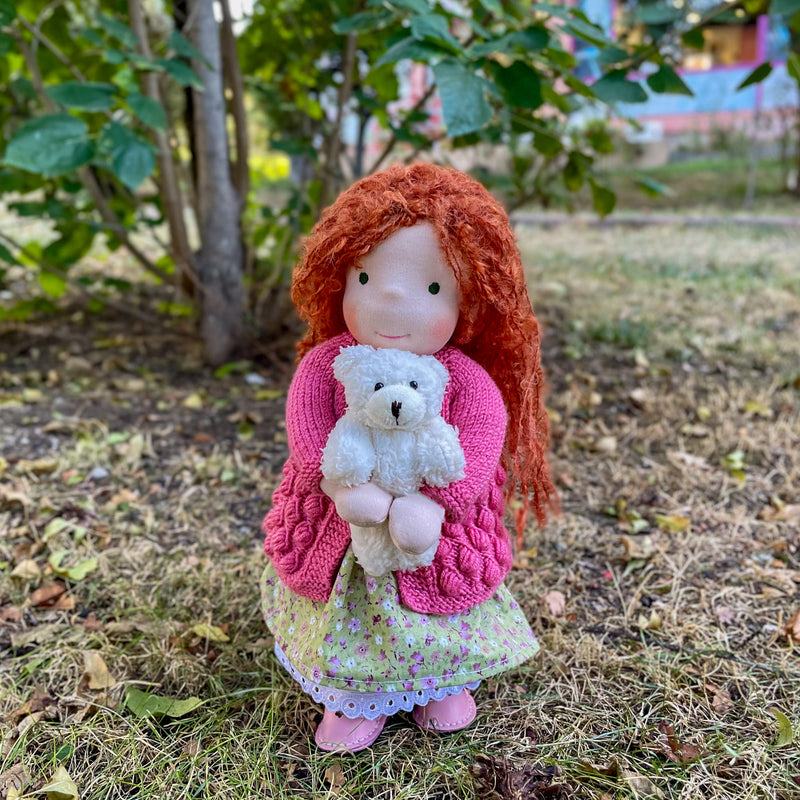
One of the most common questions parents ask before buying a Waldorf doll — particularly given the price — is how long it will actually last. It's a fair question. A $114 toy that survives six months is a poor investment. A $114 toy that a child plays with daily for seven years, and then passes to a younger sibling, is extraordinary value.
The honest answer is that a well-made Waldorf doll from quality materials can last a decade or more. Here's what that looks like in practice — and what actually determines how long a doll lasts.
The Short Answer
We regularly hear from parents whose Heartmade Dolls have been in daily play for five, seven, and even ten years. The organic cotton fabric softens with handling but doesn't thin or tear under normal play. The natural wool filling compacts slightly over years but maintains the doll's shape. The seams, stitched tightly at production, hold through years of squeezing, dragging, and washing.
This is not accidental — it's a consequence of the materials. Organic cotton and natural wool are inherently durable natural fibres. They were used in children's toys long before synthetic alternatives existed, precisely because they hold up. Polyester filling goes flat. Synthetic plush fabrics pill and thin. Natural materials behave differently.
"Natural materials soften with love. Synthetic materials degrade with it. That difference matters over years of daily play."
What a Waldorf Doll Looks Like Over Time
What Determines How Long a Waldorf Doll Lasts
Construction quality
The most important factor is how well the doll was made. Tight, even seams that will hold through years of stress. Securely attached hair that won't pull out with normal handling. A head sculpted firmly enough to maintain its shape. These qualities are determined at production and can't be compensated for later.
Materials
Organic cotton outlasts conventional cotton because it hasn't been weakened by chemical processing. Natural wool filling maintains its resilience and shape far better than polyester. These material differences become significant over years of play — a doll made from inferior materials may last two or three years before showing significant wear; one made from quality natural materials will outlast it several times over.
Care
Gentle, infrequent washing extends the doll's life considerably. Spot cleaning rather than full washing for minor marks. Hand washing in cold water when a deeper clean is needed. Air drying flat rather than machine drying. These aren't demanding requirements — but following them makes a meaningful difference over years.
Repairs
A small issue addressed early never becomes a large one. A loose seam that's re-stitched promptly won't open further. Hair that's gently detangled regularly won't mat irreversibly. The doll's longevity is partly a function of small attentions over time.

A Heartmade Doll is built from materials that improve with handling rather than degrading — organic cotton softens, natural wool maintains its resilience.
Passing a Waldorf Doll Between Siblings
One of the questions we hear most from families with more than one child is whether a Waldorf doll can be passed to a younger sibling. The answer is almost always yes — with a few conditions.
- Check the seams — any loose seams should be re-stitched before the doll goes to a younger child
- Refresh the hair — hair that's thinned or matted can often be refreshed; if significantly damaged, a maker can sometimes replace it
- Wash it gently — a fresh, clean doll is a better gift to a new child than one that still smells of the previous owner's world
- New clothing — a new outfit for the doll makes it feel like a new gift even when the doll is several years old
- Spot clean rather than washing the whole doll for minor marks
- Hand wash in cold water when a full wash is needed — never machine wash
- Air dry flat — never tumble dry
- Re-stitch loose seams promptly before they open further
- Detangle hair gently and regularly — fingers or wide-tooth comb, ends first
- Store away from direct sunlight, which fades organic cotton over time
- Let the child play freely — wear from use is different from damage
Handmade Waldorf dolls by Heartmade Doll
Organic cotton, natural wool, tight seams, secure hair. A doll built to be played with daily for years — and to survive it.
Shop Handmade Dolls →Frequently Asked Questions
How long do Waldorf dolls last?
A well-made Waldorf doll from quality materials lasts a decade or more with regular play and basic care. We regularly hear from parents whose Heartmade Dolls have been in daily play for 5, 7, and 10 years.
What affects how long a Waldorf doll lasts?
Construction quality, materials (organic cotton and natural wool outlast synthetics), care (gentle washing extends life), and repairs (small issues addressed early prevent larger ones).
Can Waldorf dolls be passed down between siblings?
Yes — a well-made doll that has survived years of play with one child can be passed to a sibling. Check seams, refresh hair, wash gently, and consider a new outfit to make it feel like a new gift.
What are the most common signs of wear on a Waldorf doll?
Slight fabric fading in high-contact areas, hair that has thinned or tangled, loosened seams at stress points, and slightly compacted wool filling. Most of these are addressable with minor repairs.